

A featured contribution from Leadership Perspectives: a curated forum reserved for leaders nominated by our subscribers and vetted by the Construction Tech Review Advisory Board.

Enterprise Singapore
Why Standards Matter for AI and Big Data
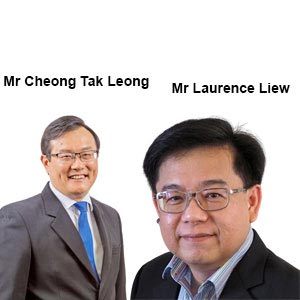
Mr Cheong Tak Leong
Artificial intelligence. Up until recently, the term would bring to mind science fiction movies or books. Technology, however, has now made it a part of our everyday life.
Take Surbana Jurong as an example. Based on lift sensor data and smart algorithms that can predict potential lifts failures up to one week in advance, Surbana Jurong’s maintenance team is now able to schedule lift maintenance to repair or replace equipment before any potential lift failure. This allows residents to enjoy reliable, uninterrupted lift service, while the company can optimise the time and deployment of its maintenance team.
The predictive value of AI is equally useful for managing the healthcare needs of Singaporeans. RenalTeam, for instance, comprising a group of medical professionals, uses AI to predict when acute conditions may set in for dialysis patients following treatments. Such pre-emptive measures save lives, provide families with peace of mind, and help patients better manage their healthcare needs.
Surbana Jurong and RenalTeam are but two companies with projects under AI Singapore (AISG), a national programme which brings together Singapore-based research institutions and the ecosystem of AI start-ups and companies.
Also under AISG, another Singapore company is using AI in its mobile application services to generate credit ratings for micro-finance applications. The company has expanded its operations beyond Singapore to Vietnam to reach individuals who lack access to conventional banking services.
AI and Big Data on the World Stage
The International Organization for Standardization (ISO) has published an ISO standard on big data and two technical references on big data reference architecture. Thirteen more ISO standards on AI and big data are under development, covering concepts and terminology, risk management, and management framework amongst others.
Represented by the AI Technical Committee (AITC) under the ISO and International Electrotechnical Commission (IEC)’s Joint Technical Committee 1 (JTC 1)/ subcommittee 42, Singapore is able to influence international standards development in this area.
Singapore is also involved in another 97ISO and IEC technical and subcommittees where we play a role in shaping international standardisation, even in emerging areas such as blockchain and smart manufacturing.
The common goal shared by Singapore and the other country participants is to create international standards that meet industries’ needs.
How Standards support Enterprise Growth in Singapore
In Singapore, the industry-led Singapore Standards Council (SSC) facilitates the development, promotion and review of standards and technical references in Singapore, under Enterprise Singapore’s national standardisation programme.
Enterprise Singapore and SSC collaborate with some 2,000 industry, research, and government partners to develop new standards and review existing ones. In 2018, SSC developed and reviewed 112 standards, impacting around 10,000 organisations.
There is continuous effort to ensure that our standards development work remains relevant and supports growing sectors and emerging areas.
Cross border e-commerce, for example, has opened up new opportunities for our retail, transport and logistic enterprises. The use of AI and big data in supporting e-commerce platforms will increase in ASEAN countries where mobile and internet penetration is growing. Enterprise Singapore is leading a study group to support efforts in harmonising standards among the ASEAN countries to enhance trade connectivity both within ASEAN and between ASEAN and other regions.
Thinking Long-Term
AI and big data are becoming increasingly important in Singapore’s Smart Nation initiative, which was introduced in 2014. Likewise, across various industries, technology-enabled solutions have been developed for the convenience of Singaporeans, and created new business opportunities for enterprises.
But beyond the use of AI and big data, a rising area of concern is cybersecurity.
The Coordinating Committee for Cybersecurity, formed under SSC and with support from the Cyber Security Agency (CSA) of Singapore, is developing a five year Cybersecurity Standards Roadmap to help organisations mitigate cybersecurity threats and enhance cyber resilience and assurance.
With standardisation, practical and constructive measures will be developed to address gaps in performance, health, governance, ethics, security and cybersecurity issues in the deployment of AI and big data. This can only benefit enterprises as they help establish trust, reliability and interoperability among industry players, consumers, government stakeholders and academia.
With all these in place, we hope to see more enterprises maximise the use of AI and big data in developing trusted products and solutions that will enable them to grow in markets, both locally and overseas.
The articles from these contributors are based on their personal expertise and viewpoints, and do not necessarily reflect the opinions of their employers or affiliated organizations.
