

A featured contribution from Leadership Perspectives: a curated forum reserved for leaders nominated by our subscribers and vetted by the Construction Tech Review Advisory Board.

Asia Pacific at Equinix
What Can Open Data offer Cities of the Future?
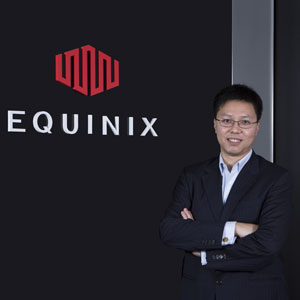
Eric Hui
Central to these goals is data—the currency of information, generating insights, and delivering intelligence that can help enhance our interaction with the world around us. Governments and private enterprises are looking for ways to share and access larger data pools, contributing to the wider emergence of Open Data, which has a key role to play in the development and subsequent success of Smart Cities.
Why Open Data Matters
Open Data refers to a data set that broadly is available to everyone. It can be freely used, re-used and redistributed by anyone in a way similar to open-source software—subject only to the requirement to attribute and share alike.
Some governments, including that of Hong Kong, will disclose open data on official portals so companies or the general public can reference this data for the purposes of research, decision-making or new types of evaluation.
As IoT prevails, the volume of data will grow exponentially.
Interconnection enables the flow, use, and analysis of data while allowing it to be provisioned in ways that can benefit anyone using it
Unlocking Valuable Insights While Staying Secure
The full potential of Open Data cannot be realized without a proper sympathetic framework. The data needs to be secure and without individual particulars, especially as consumers are becoming increasingly aware of issues regarding the use of personal data and consumer consent. People should be protected, and the only way to ensure this is to make sure that information cannot be traced to a single individual, something which governments and enterprises have been focused on ensuring when it comes to Open Data.
Once the data is generic and not personalized, it needs to be analyzed by select data tools, and then cross-layered to identify valuable insights in order for it to be used holistically. That is where interconnection comes into play. It enables the flow, use, and analysis of the data while allowing it to be provisioned in ways that can benefit anyone using it. To provide adequate protection in real-time, whilst maximizing the ability to use open data, there must be massive interconnection resources that can allow different parties to feed and consume Open Data sources with private data exchange.
Changing the Lives of Citizens in Asia-Pacific
Ultimately, Open Data is closely related to our lives—how we plan our day, use public weather information, and navigate the city. When service providers share their data, multiple opportunities are created. Imagine different hospital departments being able to share information on patient waiting time to help speed up patient processing and resource allocation. Now we begin to see the value of open data-driven interconnection.
To find value in data, we look for patterns, trends and extrapolations. Data management and data exchange created under an Interconnection Orientated Architecture (IOA) context aims to address the closeness of data to multiple sites in order to find richness and insight. When delivering Smart Cities, governments are required to have multiple speedy analytic engines and conjoint analysis to find gold in these data sets. The gear behind all these will undoubtedly be interconnection.
