

A featured contribution from Leadership Perspectives: a curated forum reserved for leaders nominated by our subscribers and vetted by the Construction Tech Review Advisory Board.

Masashi Sakamoto
2021, in this Corona era, will be a year in which several things that had changed in business will finally settle down.
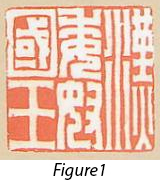
In Japan, we have our own personal identification stamp which is called a Hanko. It is used as proof of individual identity for uses such as marriage registration, change of address, contracts, and official and private documents. It goes back to the “King of Na gold seal (National Treasure of Japan)“ in 57 AD. Now the Japanese government is trying to change this Hanko culture which has lasted about 2000 years. This is one of the main measures which the Prime Minister of the new government has adopted during the Corona era.
A Hanko is made of a substance such as metal, wood and plastics, etc.; so by signing and stamping a physical paper document, it is possible to prove that the document is unique. Such customs are commonplace for Japanese people. It plays the same role as notarization in the US.
Figure1: Images of Hanko, “King of Na gold seal”
Source by Wikipedia
Since this is a story of abolishing such a fine old “tradition” and “culture” of the Hanko, the idea of “out with the old, in with the new” is a challenge.
In the name of digital transformation (DX), every document is being transferred to a digital form. In the process of “eliminating stamps”, the key is whether or not we can digitally prove that a document is unique. Further advances in technology such as in document management, copyright protection, and personal authentication as an alternative to stamps are expected to lay the foundation for establishing this. It is great that simplification also increases convenience. But on the other hand, if the stamp is “culture”, you need a DX that acknowledges “If a man keeps cherishing his old knowledge so as continually to be acquiring new, he may become a teacher of others .” I also think so.
The equivalent of this movement of “digitizing paper documents” is “non-face-to-face service”. With the advent of video chat tools such as Zoom, online conferencing, remote work, LIVE commerce, and virtual customer service are expected to become more and more established. Even after humankind has been able to move to the after-corona era, I think that what was originally considered to be “face-to-face” will continue to be replaced by “non- face-to-face”. It is often said that EC will take the place of human intervention such as for “sales” and “customer service”. But not all products can be dealt with electronically, such as luxury products and financial and pharmaceutical products that require detailed explanations. Business requiring human explanation or persuasion will continue to exist.
It is believed that services that respond to such issues will take root as a new way of retailing. This concept should include ①stores ②EC and the third channel that follows these is ③virtual customer service (online visit). The convenience for end users is that, for example, customers who live far away and cannot go to the store will be able to shop with satisfaction by being treated properly. The convenience on the store side is that it will be possible to provide “products and services that require people to talk” without opening a new store or opening an EC.
These services are gradually becoming more widespread in this Corona era. The time has come when it is commonplace to make reservations at retail stores and receive online customer service. The representative service for this is called “AICO”, which started in Japan, and which values “o・mo・te・na・shi (hospitality)”. Global brands such as Hugo Boss and FENDI have already begun to adopt it, and it is drawing a lot of attention in Japan. www.goaico.com
AICO is a service that goes all the way from pre-customer service by AI chat to face-to-face online customer service, and to credit card payment. It is an End to End model that shows the ideal way of retail in the new era.
It seems that the keywords for 2021 can be said to be “Things present are judged by things past” and “E2E”.
