

A featured contribution from Leadership Perspectives: a curated forum reserved for leaders nominated by our subscribers and vetted by the Construction Tech Review Advisory Board.

Bridgewater State University
Meeting Today's ITSM Challenges
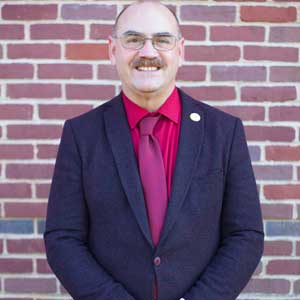
Raymond Lefebvre
We’re doing this uniquely by repositioning existing IT professionals from within the organization providing new career opportunities and without adding any extra headcount. We have a 278-acre campus wherein we are establishing a centralized IT service center for students, faculty and staff, instead of having helpdesk counters at multiple locations on campus. Currently all services are offered at three locations on campus where customers receive the service that they need. If they can’t get help from the contact person, they end up going to another helpdesk location or wait for a ticket to be opened to get help.
What are the challenges you are witnessing today?
The challenge so far has been about the organizational change management and the fact that I’m trying to guide 60+ IT employees through that transition and also at the same time support my organization to evolve into a services organization from a team currently focused on providing support. We need to recognize that we need to pivot from a support organization to a service provider, achieve that transition, and then focus on becoming a true strategic partner of the institution. Transitioning to a service provider has been a challenging task as there are many problems associated with consolidating first level and second level support together and their use. Staffs, understandably, are not used to working directly together because they’re physically separated from each other today. Therefore, there are unique challenges associated with ensuring the change management process’s success when they’re co-located.
In order to overcome these challenges, I have been applying leadership skills and best practices wherein, every two weeks, I meet with all impacted parties and run a two-hour brainstorming session. We have been doing this for the past two months now, and it seems like it has been beneficial. I ask people what they want to get out of the transition when they move into this common location. Further, in this new centralized location, we’re exploring implementation of a new text-based waitlist system; instead of going up to a counter and waiting in a line to get help, through these systems, students will be able to text the word “add” to a phone number, and when they do, they will be added to the queue.
Additionally, we recently launched a laptop loaner program in partnership with the Bridgewater State University library, wherein students can borrow laptops (free of charge) the same way that they check out a book—simple and easy using their university electronic identification card. This pilot program has been so successful that this fall we will be adding Chromebooks, MacBooks, and iPads to the loaner pool. We will also be implementing new cell phone/tablet charging tables around campus so that students can get a quick charge (free) on the go.
The Bridgewater University Information Technology team also runs a special program called Technovation (Technology Innovation) and has established a technology innovation incubator (Technovator)—a conference room with whiteboards, a smartboard, and other ideation technologies. Smart Parking—an innovative project born out of Technovation—is an extension of our mobile app wherein all commuter students will find it easier to find parking on campus through the use of RFID parking stickers. Starting this fall students will be getting new RFID (Radio-frequency identification) based stickers. Now when they drive into the parking garage or select parking lots, we have RFID readers at the entrance points and exit points and will be able to count cars coming in and out. We know how many spaces are available in the parking lot and this information will be available on the mobile app. This will show students the information about the parking lots—such as which ones are full, close to full, or have plenty of parking. This is an attempt on our part to help alleviate the frustration of students and help them reach the closest parking lot so that they can focus on getting to class and being successful in school.
Currently, we are working on exploring Amazon Echo show devices (ALEXA@BSU). We started with two people, my associate VP and I. Just two weeks ago, I extended the pilot program in my division by rolling out an additional 20 units. All the twenty members in my leadership team now have Echo Show devices, and they’re all interconnected, and hence, we can “drop in”—video conference—with each other by just saying the name of the person and the device will drop right in on them and we have an instant video presence. Through this, we’re trying to improve inter-departmental communications starting with IT. We believe that this effort will be successful and will enable us to broaden these devices into other departments. We could use Skype or Hangouts, but all of those technologies require an individual to click and launch, to reach out to somebody. However, with the Echo Show device and voice recognition, it’s so instantaneous that you can get face to face.
What would be the single piece of advice that you could impart to a fellow or aspiring professional in your field, looking to embark on a similar venture or professional journey along the lines of your service and area of expertise?
My advice is threefold—“innovate, engage, and commute.” I work in a non-profit higher education organization and have to stretch every penny in ten different ways; budget cuts year over year have become the norm. But the constant reduction in funding doesn’t necessarily mean that you should do less because you’re getting less. This provides an opportunity to be innovative and to do more with less because it’s the right thing to do. Secondly, it’s imperative to engage with your constituents, in our case students, faculty, and staff, to understand what they need to be successful and to engage with your team to help everyone achieve successful outcomes. Last, but not least, take advantage of your commute time to/from work and as a leader use this time wisely for strategic thinking and continuous improvement—personal and professional.
At the end of the day as a VP and CIO, it’s about helping people achieve success through value creation, and I am proud of what I have achieved over the course of my career, and I my wish is that my counter parts will also get inspired by what I believe in—value creation through innovative, cost-effective teamwork—and achieve success in their leadership roles.
Ray Lefebvre is Vice President of Information Technology and Chief Information Officer for Bridgewater State University in Massachusetts. Before joining Bridgewater State in 2012, he was the Director of Applications Development and Enterprise Reporting for the University of Massachusetts Medical School. He also has more than two decades of IT experience in the private sector.
